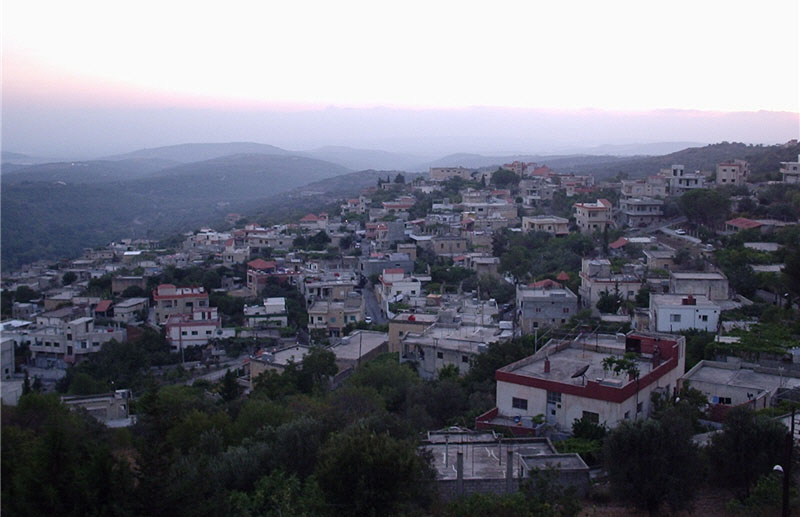
The place
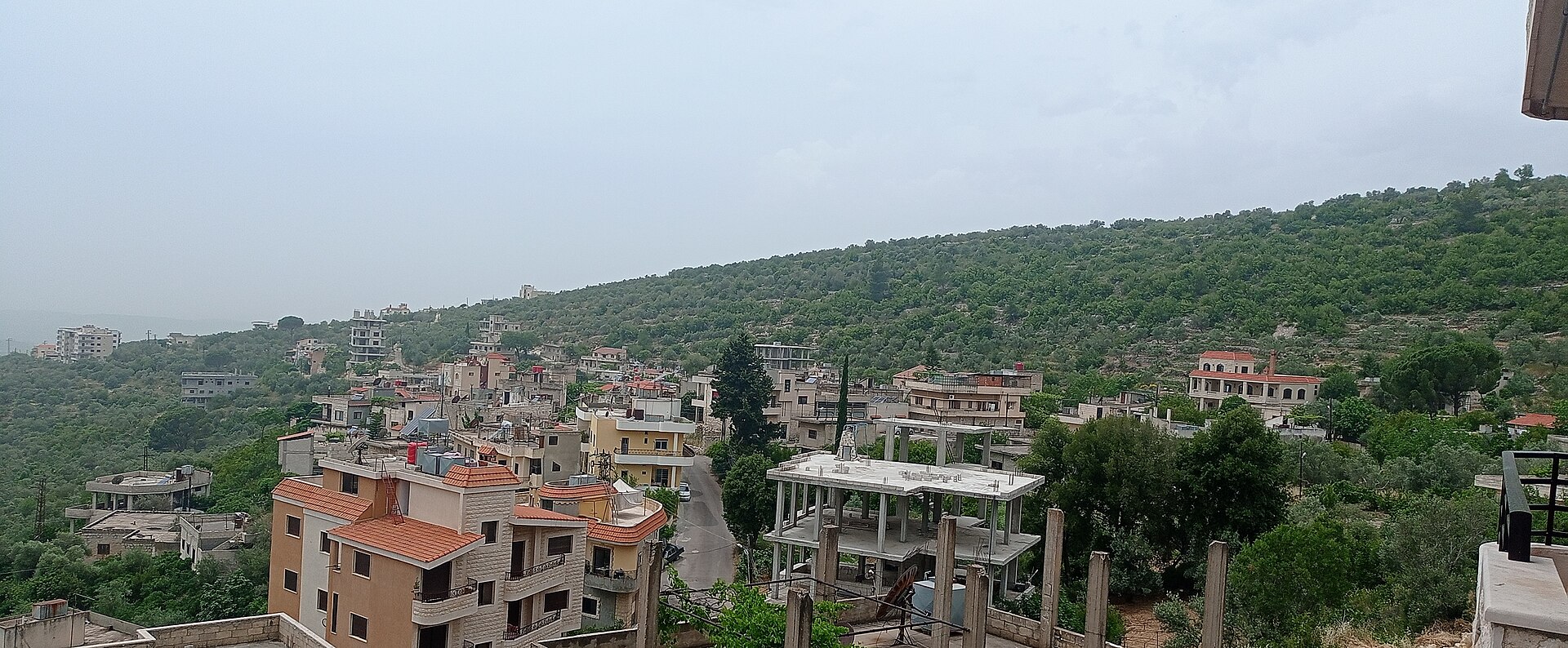
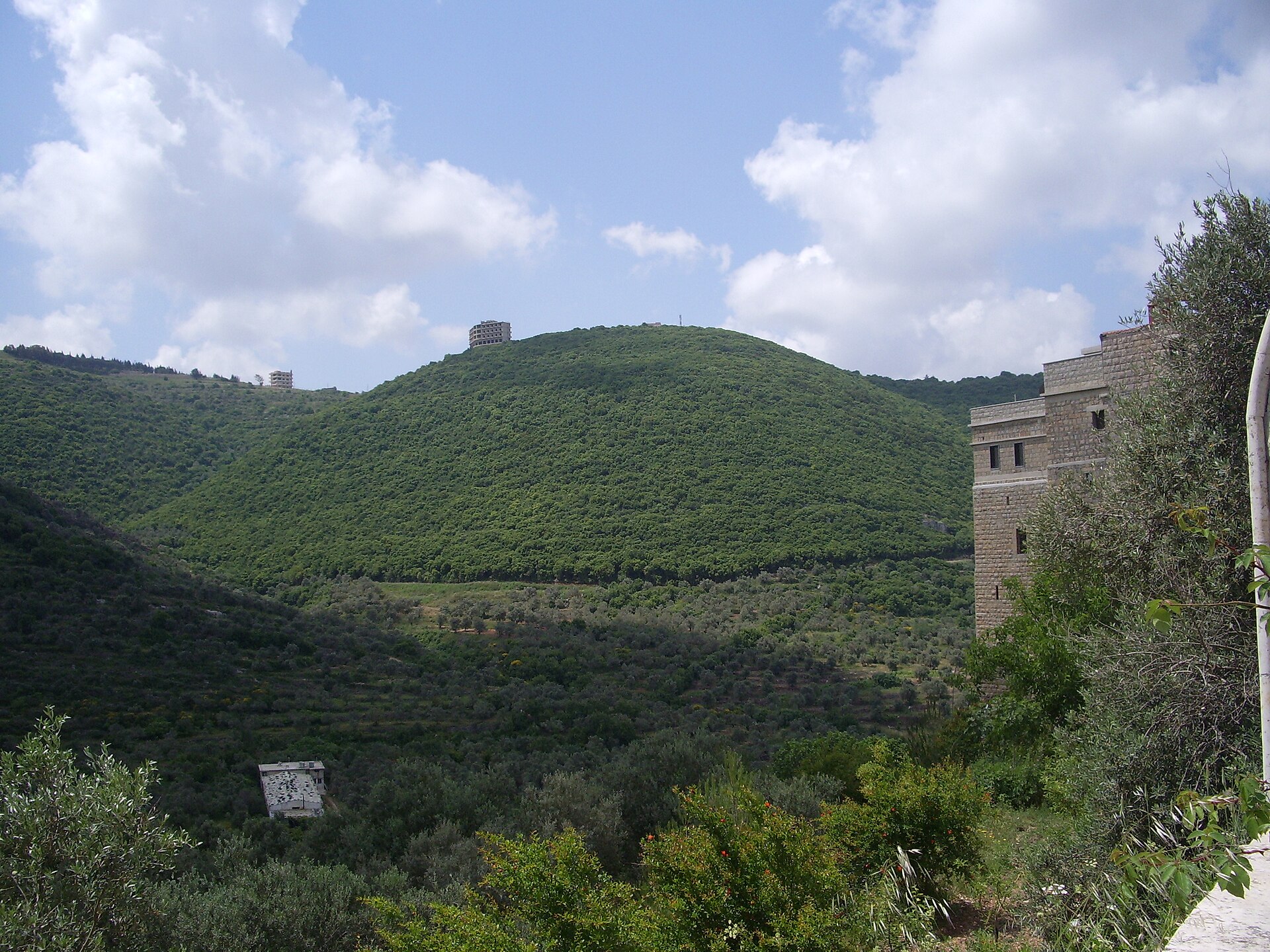
Zweitina sits in Wadi al-Nasara (وادي النصارى, “Valley of the Christians”; also called Wadi al-Nadara), a cluster of roughly 40–50 mostly Christian villages in the western countryside of Homs — about 50–65 km west of Homs city, between the Syrian Coastal (Ansariyah) Range and the interior highlands, close to the Lebanese border and routes toward Tartus. Neighboring places include Marmarita to the north, al-Hawash to the east, al-Husn and the Krak des Chevaliers to the southeast, Oyoun al-Wadi and Mishtaya in the same valley network, and Ain al-Raheb among the approach routes from Saint George’s Monastery.
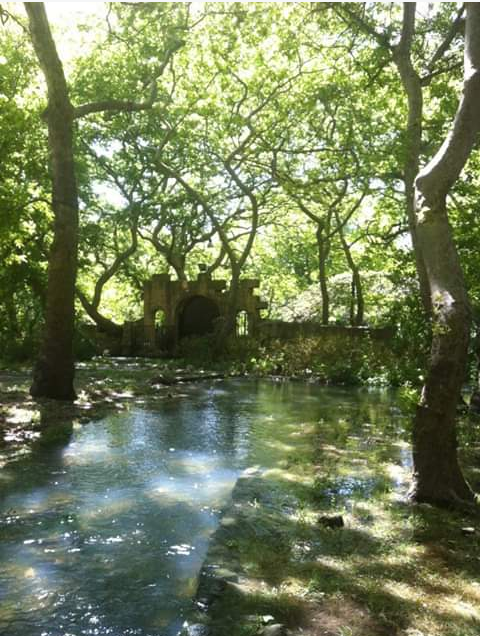
A long valley overview describes a Mediterranean climate (mild wet winters, hot dry summers), karst limestone that feeds intermittent springs, terraced olives and vineyards, and forested slopes that are beautiful — and fire-prone. Fuwwar / al-Fawwar Spring in Zweitina is called out there as a geological curiosity that “gushes water irregularly in bursts.”
The Arabic name Zūwaytīnah is commonly explained two ways:
- Olive: from zeitoun (olive); zweitina can mean a single olive fruit. Olives remain a signature crop.
- Aramaic / silk: an older folk etymology ties the name to land where silkworms were raised on mulberry trees along the spring — a craft once common across this part of the Levant.
History as far back as the record goes
Zweitina itself is a small mountain village, so most of its deep past is the history of the valley and the monuments around it — Roman highland Syria, Byzantine Christianity, Crusader frontier, Ottoman mountain life, and twentieth-century emigration — rather than a long paper trail naming this one settlement in every century.
The intermittent spring later called al-Fawwar (“the gusher / the one that boils up”) is reported in historical topography as having been known as Sabte in the era associated with the Roman emperor Titus’s presence in Syria (René Dussaud’s classic Topographie historique de la Syrie antique et médiévale is the citation used on the English Wikipedia village page). Intermittent karst springs like this were landmarks for travelers and farmers long before modern tourism.
In broader regional histories, the wider Homs countryside shows prehistoric and Bronze Age settlement, then Seleucid and Roman agrarian expansion around ancient Emesa. Wadi al-Nasara itself reads as peripheral highland farmland rather than a named urban center — hermits and monasteries later made the valley famous more than city walls did.
Christianity became the durable identity of the valley. Of roughly three dozen settlements in Wadi al-Nasara, the great majority have been Greek Orthodox Christian for centuries. Nearby Saint George’s Monastery (Deir Mar Georges / دير مار جرجس) at al-Mishtaya is traditionally linked to the 5th–6th centuries (often associated with Justinian I) and sits on what local tradition describes as an older sacred site. After the Muslim conquest of Syria (634–638), those accounts stress the valley’s geographic isolation as a reason Christian communities endured under dhimmi arrangements such as the Covenant of Umar traditions preserved at the monastery. The valley’s church life today falls under the Greek Orthodox Archdiocese of Akkar (seat historically connected to Lebanon).
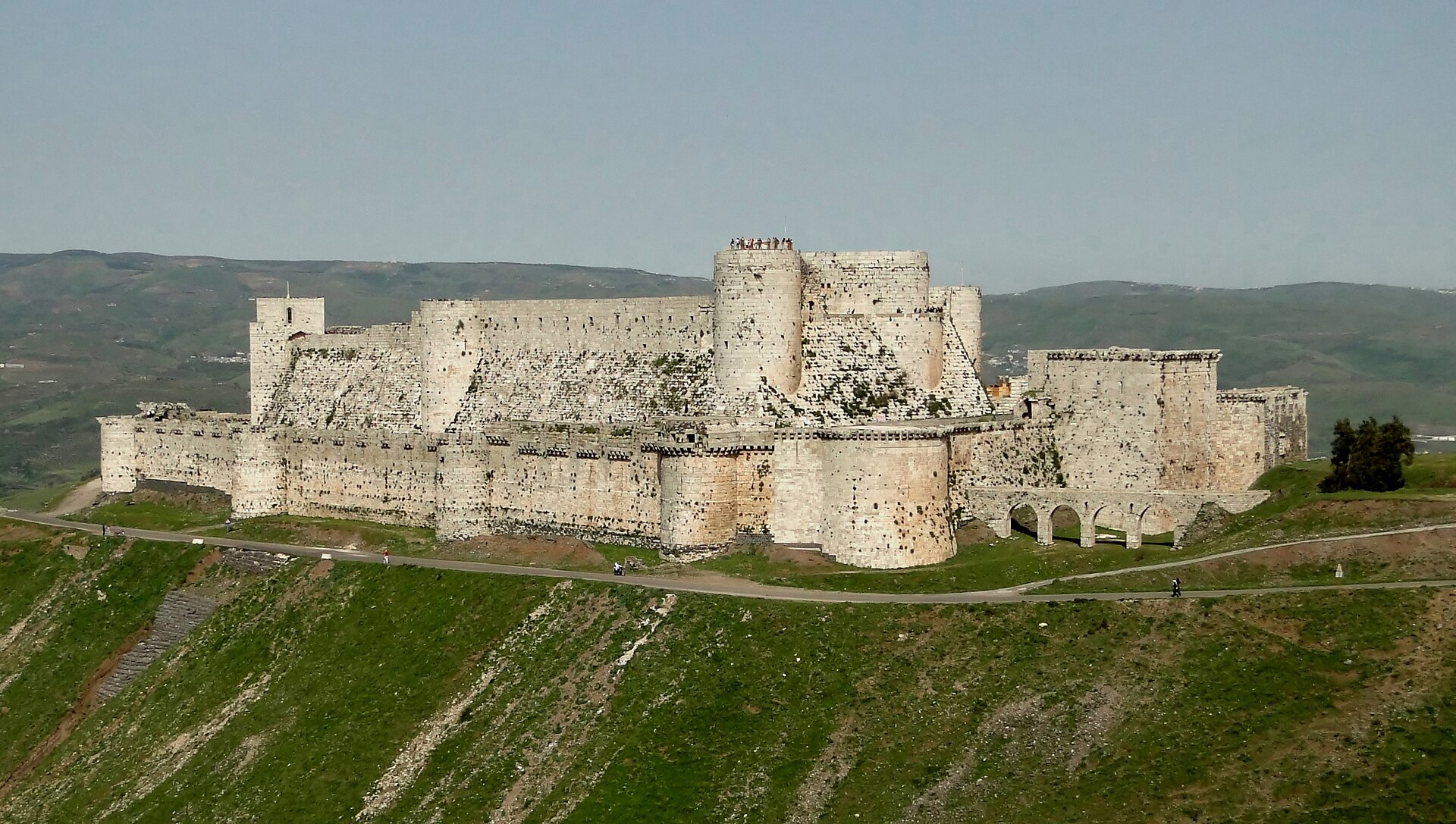
A few kilometers away stands Krak des Chevaliers (Qal‘at al-Ḥiṣn / قلعة الحصن) — one of the best-preserved Crusader castles in the world, controlling the Homs Gap route between the coast and the interior. Zweitina’s Christian mountain communities lived in the shadow of that fortress world: Latin military orders, local Syrian Christians, and later Muslim rulers overlapping in the same landscape. Layers under Saint George’s Monastery include a 13th-century chapel level remembered in modern descriptions of the complex.
The valley remained a Christian highland pocket under successive Islamic polities, with olive oil, silk-related mulberry culture, and seasonal herding/farming typical of the coastal hinterland. Village names across Wadi al-Nasara preserve Aramaic and Arabic strata — a reminder that this was never an empty mountain waiting for modern settlement.
Under the Ottomans (from 1516), Greek Orthodox and Melkite communities lived in the millet system — communal autonomy through church hierarchies in exchange for taxes and dhimmi rules. accounts note that the valley’s rough terrain limited large-scale Muslim settlement, helping keep a Christian majority across dozens of villages into the 19th century. The 1860 Mount Lebanon / Damascus violence heightened insecurity across Ottoman Syria; the valley was not the main killing ground, but it pushed communities toward tighter village defense and, later, emigration.
Economic pressure, insecurity, and missionary/letter networks pulled many Christians from “the Christian Valley” toward the United States. In Pennsylvania’s Lehigh Valley — especially Allentown — Syrian Christian families began arriving in the late nineteenth century; St. George Antiochian Orthodox Church in Allentown was founded in 1916 and became a community hub. Zweitina is repeatedly named as one of the villages feeding that Pennsylvania chain migration.
Summer resorts, village churches (Greek Orthodox and Greek Catholic), and olive agriculture shaped local life. During the French Mandate (1920–1946), records show roads, bridges, and missionary/church schools that knitted the valley to Homs and the coast. Saint George’s Monastery was rebuilt/expanded in the modern era (the present church is dated to 1857 in standard accounts) and later revitalized; Patriarch John X of Antioch — born in neighboring Marmarita — served as abbot there (1995–2002) before his elevation.
Under Ba‘athist rule, the state marketed the valley as a minority-friendly tourism brand (“Valley of the Christians”), pairing monasteries with Krak des Chevaliers. Pre-2011 Syria’s tourism boom (millions of visitors nationally) put Marmarita, al-Mishtaya hotels, and Zweitina’s spring restaurants on domestic and Lebanese day-trip circuits.
Syria’s Central Bureau of Statistics counted 697 people in Zweitina — a year-round figure that understates summer returnees and diaspora ownership of houses.
Wadi al-Nasara was not spared the country’s wider trauma. Tourism collapsed; monasteries and villages faced shelling and rebel pressure from 2012 onward (including fighting tied to positions near Krak des Chevaliers). summaries put early-war displacement on the order of ~20–25% of the valley population, local Christian self-defense formations (later often folded into National Defense Forces structures), and the 2013 attack on Saint George’s Monastery driven off by volunteers at heavy cost. Many families already abroad stayed abroad; others left.
Arabic press and tourism pieces still present Zweitina and al-Fawwar as an environmental outing — restaurants around the spring, oak forest walks, access via Deir Mar Georges, Marmarita, and Ain al-Raheb. Other valley timelines also note:
- Large wildfires in the wider Wadi al-Nasara area in September 2025, damaging forest and olive land.
- A deadly shooting of Christian youths in nearby Annaz / Anaz on 1 October 2025, followed by protests and a general strike across valley villages (reporting varies on perpetrators; treat as contested).
- Political upheaval after the Assad government’s fall in late 2024, with continued minority security anxiety.
Treat “current” conditions as fluid. This page is a historical and cultural portrait, not travel advice.
Landmarks around the village
Al-Fawwar spring (نبع الفوار)
The spring that “boils up” without a steady schedule is Zweitina’s signature natural feature — karst water that appears suddenly, feeding restaurants and gathering spots at the foot of the village. It is the main reason day-trippers know the name.
Saint George’s Monastery (دير مار جرجس)
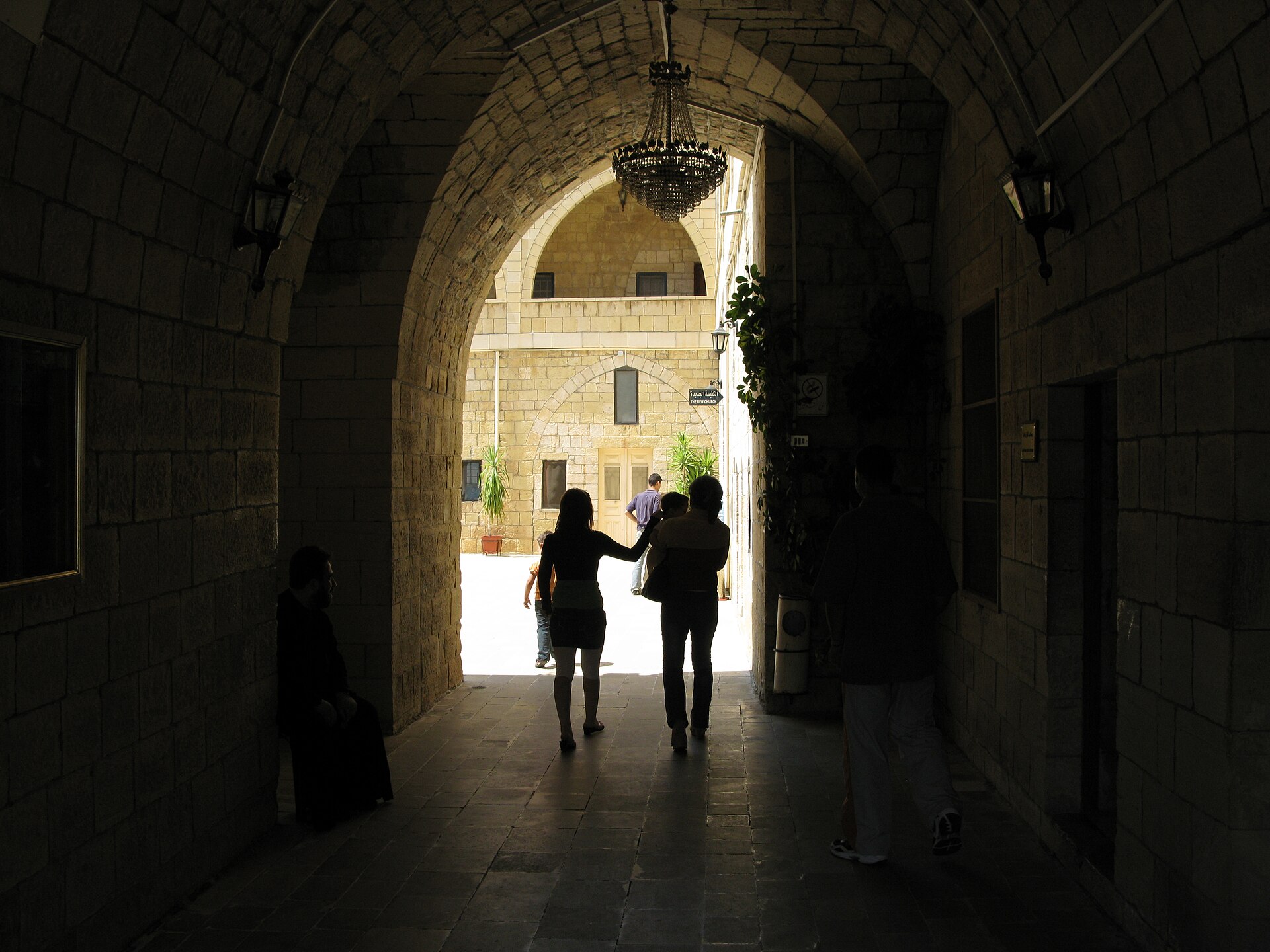
Just down-valley at al-Mishtaya: Byzantine foundations, Crusader-era and later layers, a busy pilgrimage calendar on Saint George’s feast (May 6) and the Exaltation of the Cross (September 14), and a treasury of icons, manuscripts, and local memory — including the tradition of a document associated with the caliph Umar on Muslim–Christian relations. It is one of the spiritual anchors of the whole valley, not of Zweitina alone, but every village history here runs through it.
Krak des Chevaliers (قلعة الحصن)
UNESCO-listed Crusader castle above al-Husn — the military twin to the valley’s monastic story. From the hills around Zweitina you are never far from that silhouette of stone and history. Hospitaller rebuilds from the mid-12th century and the 1271 Mamluk capture by Baybars are the big military chapters many histories highlights for the fortress.
Lady of the Valley (سيدة الوادي)
On Mount al-Sayeh (Jabal al-Sāʾiḥ, “Mount of the Pilgrim”) above al-Nasirah stands a 30-meter Virgin Mary statue inaugurated 16 August 2009 — often called the tallest Marian statue in the Middle East. Built atop earlier Byzantine monastic ruins, it became a major Assumption-feast pilgrimage point for Syrians and Lebanese visitors and a visual landmark over the Christian villages, including the approaches toward Zweitina.
People, faith, and seasons
Inhabitants are predominantly Greek Orthodox Christians, with a Greek Catholic (Melkite) presence as well — matching the wider valley pattern (church estimates often put Christians at ~98% Greek Orthodox among the valley’s Christian majority before the war). Year-round numbers stay modest; summers swell when diaspora families, city relatives, and visitors fill houses and the spring restaurants. Roughly three-quarters of the original population are often described as living outside the village for most of the year.
Olive oil, gardens, forest edge, and mild elevation (~450 m in local descriptions) set the everyday landscape. Culture is Antiochian Christian: feast days (Saint George on 6 May; Exaltation of the Cross on 14 September; Assumption pilgrimages to Lady of the Valley around 15 August), the Marmarita Carnival (14 August) with dabke and church choirs, Arabic as the living language, and English in diaspora branches.
A Syriac Press heritage note names longstanding valley families including Salloum and Shhayeb in villages such as Zweitina — useful seeds if you are tracing kinship or diaspora surnames.
Diaspora
Emigration is not a side note for Zweitina — it is central to who the village is.
Pennsylvania, especially the Lehigh Valley
English and Arabic sources name Pennsylvania as home to the largest concentration of families from Zweitina — on the order of ~500 families in widely repeated figures (drawn from local valley websites archived via Wikipedia). Wikimapia community notes specifically highlight Allentown and the surrounding area.
That fits a bigger story: the Lehigh Valley hosts one of the oldest and largest Syrian communities in the United States. Late-1800s arrivals worked as peddlers and factory labor; churches such as St. George Antiochian Orthodox Church (Allentown, founded 1916) organized parish life. Local community leaders have long described origins in dozens of villages of the “Christian Valley.” When Syria’s civil war produced a new refugee wave after 2011, Allentown’s older Christian Syrian networks and newer arrivals sometimes differed in politics and religion — but the city’s map still traces back to the same western Syrian highland.
Elsewhere
Like other Wadi al-Nasara villages, Zweitina families are also found across Syrian cities (Homs, Damascus, the coast), in Lebanon, and in other Americas/Europe destinations typical of Levantine Christian migration. Summer return — when borders and safety allow — keeps houses painted, olives harvested with relatives, and the village population briefly looking like its old self.
Today (snapshot)
- Still a Christian mountain village in Talkalakh / al-Nasirah administration, Homs Governorate.
- Al-Fawwar (Fuwwar) remains the postcard attraction; monastery, Krak, and Lady of the Valley are the regional magnets.
- Year-round population small; seasonal and diaspora rhythms still define the calendar.
- 2025 valley news includes major wildfires and the Annaz shooting protests — security and recovery remain unsettled.
- Syria’s national situation continues to shape travel, investment, and whether émigrés come home in August.
If you have family photos, municipal documents, or corrections to names and dates, this page can be updated — village history is always stronger when locals and diaspora archives fill what encyclopedias leave thin.
Links from home
For people in the diaspora: places to click for news, photos, music, church, food, and maps — the kinds of things you’d see, buy, hear, eat, and pray for back home in the valley. English labels below; Arabic names stay where they help you search.
News from the village
See the valley
Hear it — music & carnival
Taste of home — food (Pennsylvania)
Church & prayer
Landmarks & reading
On X (Twitter)
There is no big official village account on X. Use these searches and news handles when you want live chatter.
Flags of Syria — past to present
Syria’s national flags changed with empires, mandates, unions, and revolutions. Below is a plain-English timeline of the designs most people mean when they talk about “the Syrian flag.” Colors and stars carried political meaning; this page records the designs, not a judgment of any government.






Sources & further reading
- Grokipedia: Wadi al-Nasara (valley history, Fuwwar Spring, war & 2025 notes)
- Grokipedia: Lady of the Valley
- Grokipedia: Krak des Chevaliers
- Grokipedia: Oyoun al-Wadi (neighboring village; situates Zweitina in the ~40-village network)
- Wikipedia: Zweitina (and Arabic الزويتينة (حمص))
- Wikipedia: Wadi al-Nasara
- Wikipedia: Saint George’s Monastery, Homs
- René Dussaud, Topographie historique de la Syrie antique et médiévale (cited for the Sabte / Fawwar spring note)
- SANA archive feature on Zweitina and al-Fawwar (environmental tourism piece)
- Wikimapia community page “Zwaitiny / Al-Zuwaytinah” (local spelling variants; diaspora notes)
- WHYY / NPR / WFMZ reporting on Allentown–Lehigh Valley Syrian Christian communities and refugee-era debates
- Image files from Wikimedia Commons — Wadi Al-Nasarah (licenses on each caption)